How to Display a Pet Portrait in Your Home
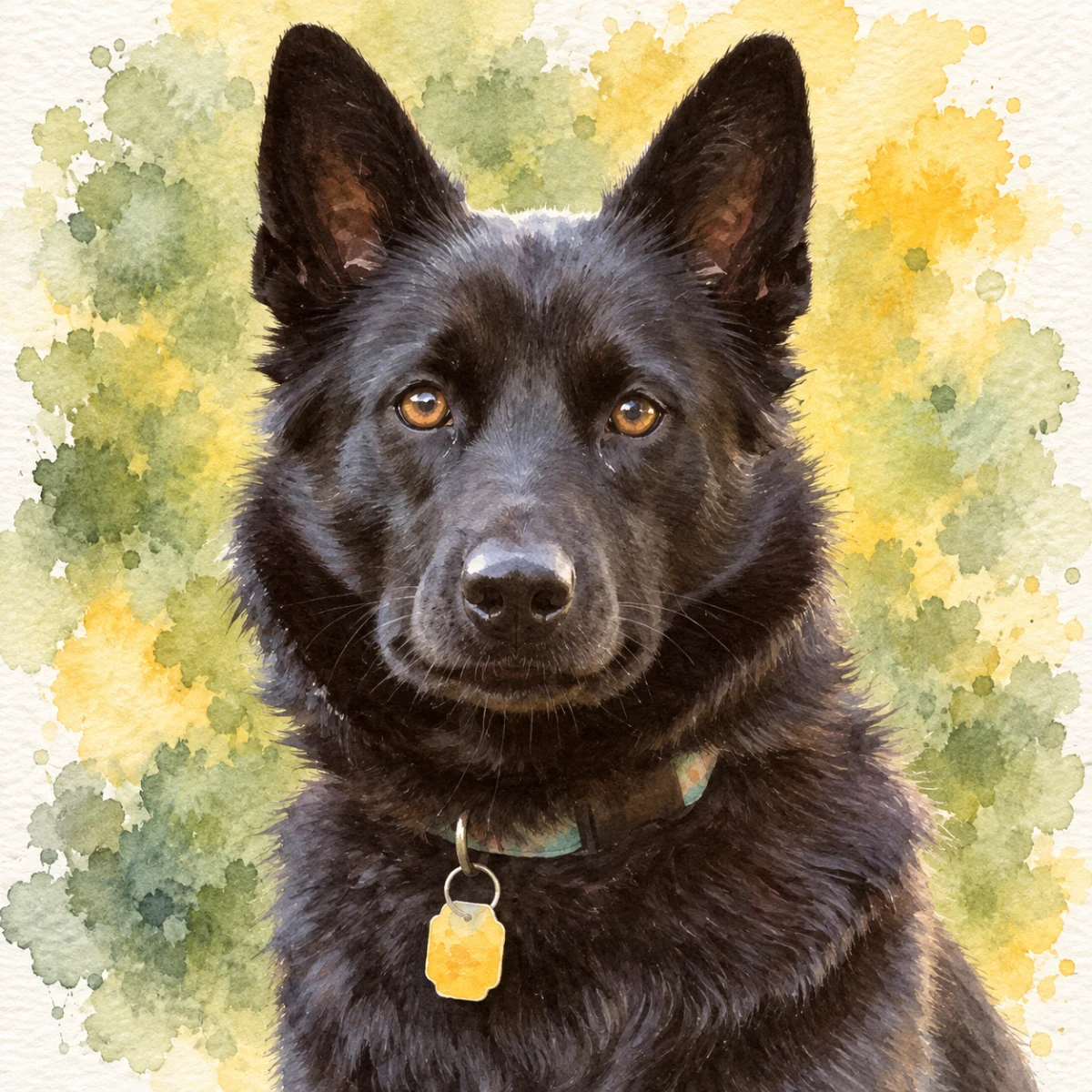
Once a custom pet portrait arrives, the question is where it should go.
Free preview No account needed Order when you love it
Once a custom pet portrait arrives, the question is where it should go. The wrong placement makes a beautiful portrait read as awkward; the right placement makes it feel like the room was always meant to have it. This guide walks through room-by-room placement decisions, sizing rules for different walls, and the small details (lighting, framing, height) that make a pet portrait actually feel at home.
By PhotoCardMagic Editorial Team · Last updated
At a glance
- Preview
- Free to try
- Steps
- 5 steps
- You'll need
- 3 items
- Skill level
- Beginner-friendly
- Cost to try
- Free · no signup
Before you start
- ✓ A custom pet portrait that has arrived
- ✓ Basic hanging supplies (a level, picture hooks)
- ✓ About 30 minutes
Expected outcome: A pet portrait displayed in the right room, at the right scale, at eye level, with appropriate lighting — the room reads as if the portrait was always meant to be there.
Steps
-
1
Pick the right room for the portrait style
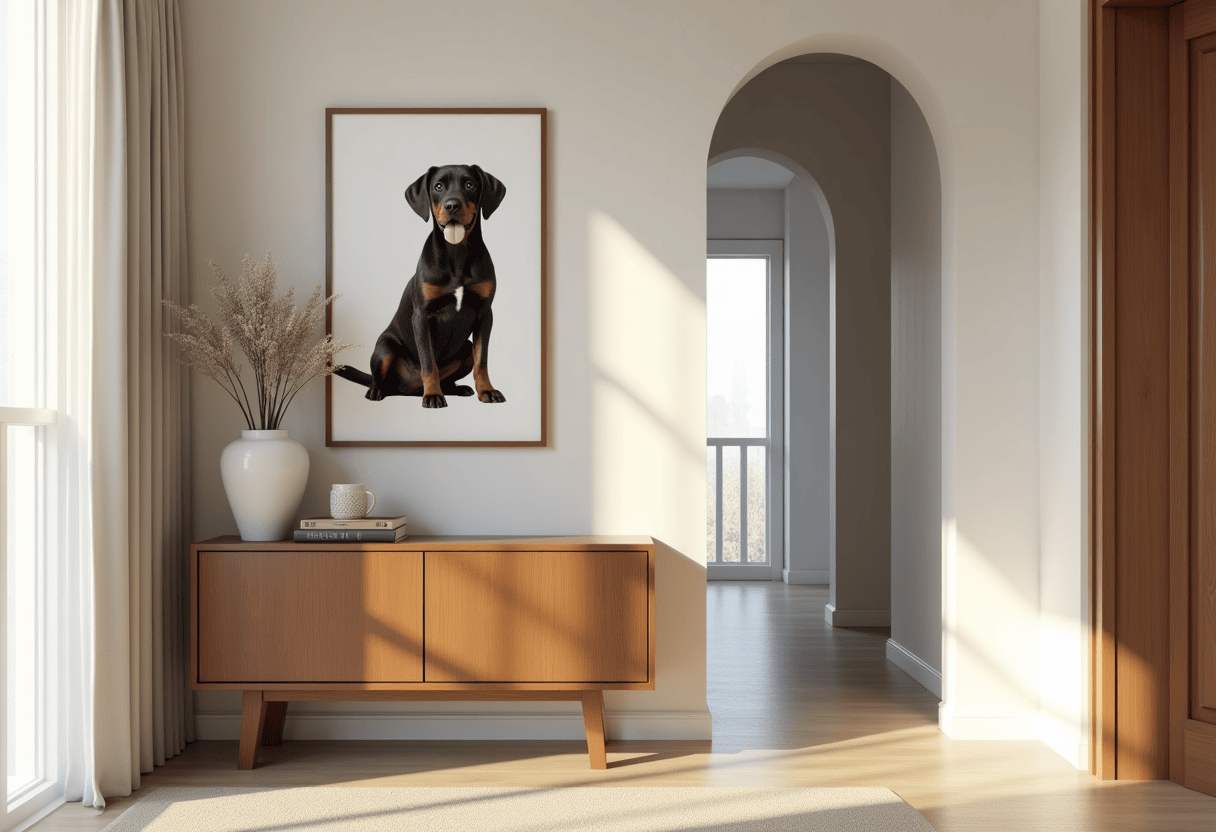
Different styles suit different rooms. Watercolor and oil painting can work in living rooms, hallways, or bedrooms; Pop Art and Comic Book Hero can suit brighter spaces. For a memorial portrait, consider a quieter location that feels right for the owner. Avoid bathrooms with high humidity and walls in direct sunlight, which can affect prints over time.
-
2
Match the size to the wall
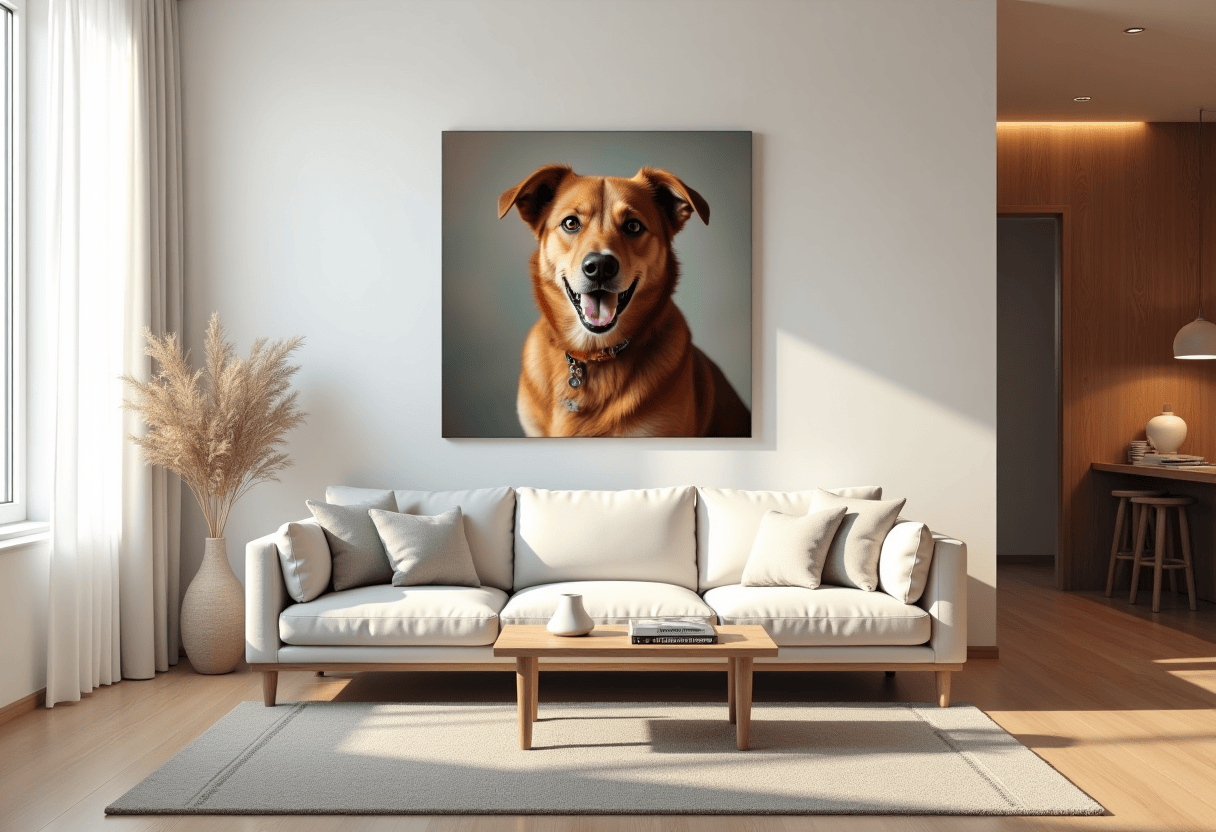
Pet portrait size should match the wall scale. Above a couch or fireplace: 16x20 canvas. Hallway at eye level: 11x14 framed. Bookshelf or accent shelf: 8x10 framed. Bedside table: 5x7 tabletop canvas. Kitchen or kid's bedroom: 12x12 square canvas. Going too small for a large wall produces a portrait that looks lost. Going too large for a small wall produces a portrait that dominates the room.
-
3
Hang at eye level
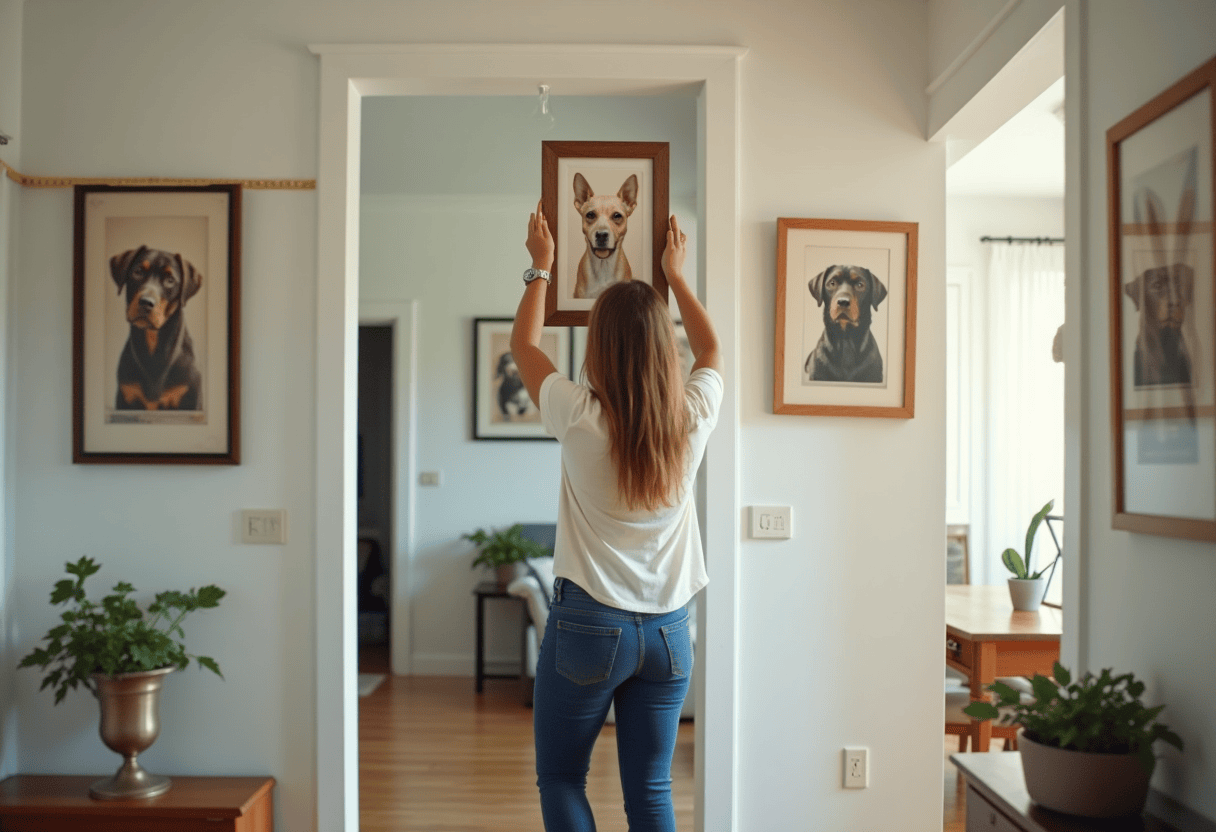
The right hanging height is roughly 57 inches from floor to center of the portrait. This is the eye-level standard used by museums and galleries, and it's almost always lower than people instinctively hang art at home. Use a tape measure and a level. For frames over 11x14, use two hooks instead of one for stability. Avoid hanging directly above radiators or HVAC vents — temperature swings stress framed prints.
-
4
Add accent lighting if the wall is dim
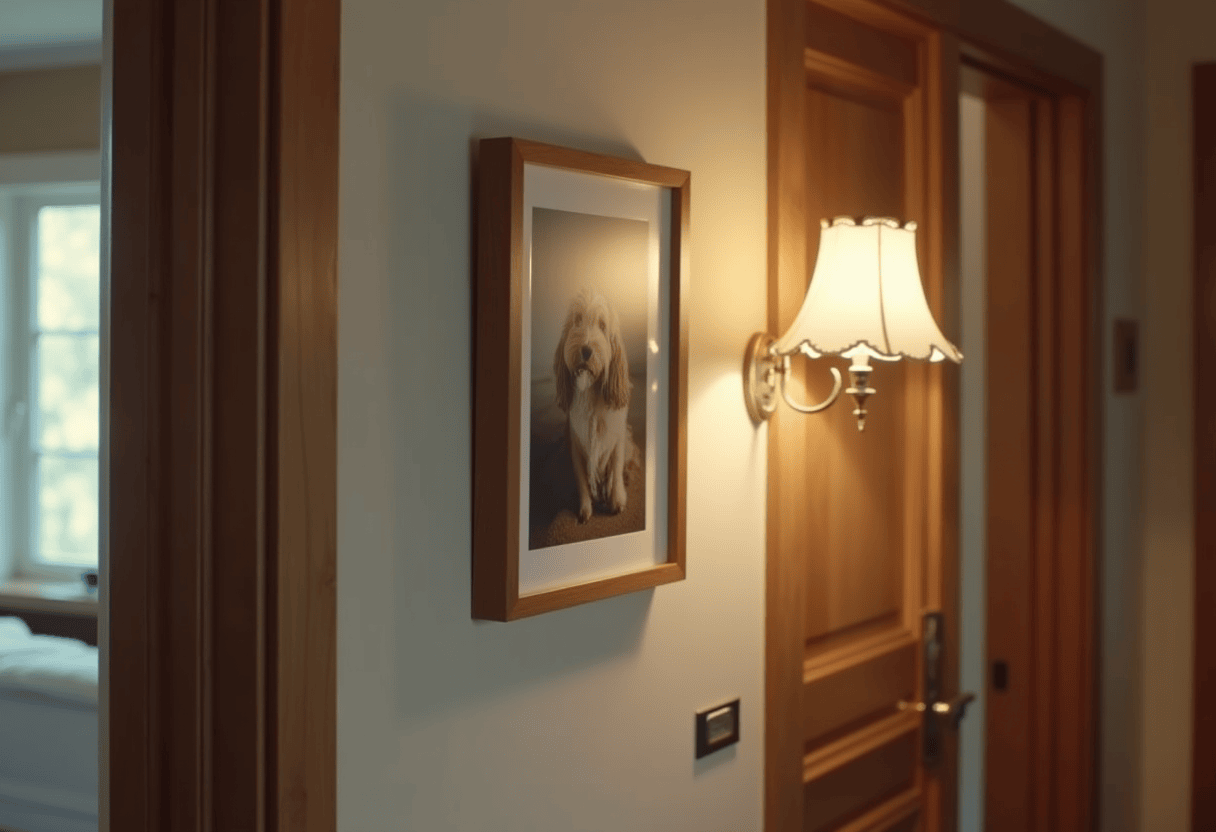
Pet portraits in dim hallways or interior walls benefit from accent lighting — a small picture light above the frame, a track-light directed at the wall, or a wall sconce nearby. Lighting transforms a beautifully framed portrait from 'on the wall' to 'curated.' If you can't add fixtures, consider relocating the portrait to a wall with natural light at some point during the day.
-
5
For multi-pet households, build a gallery
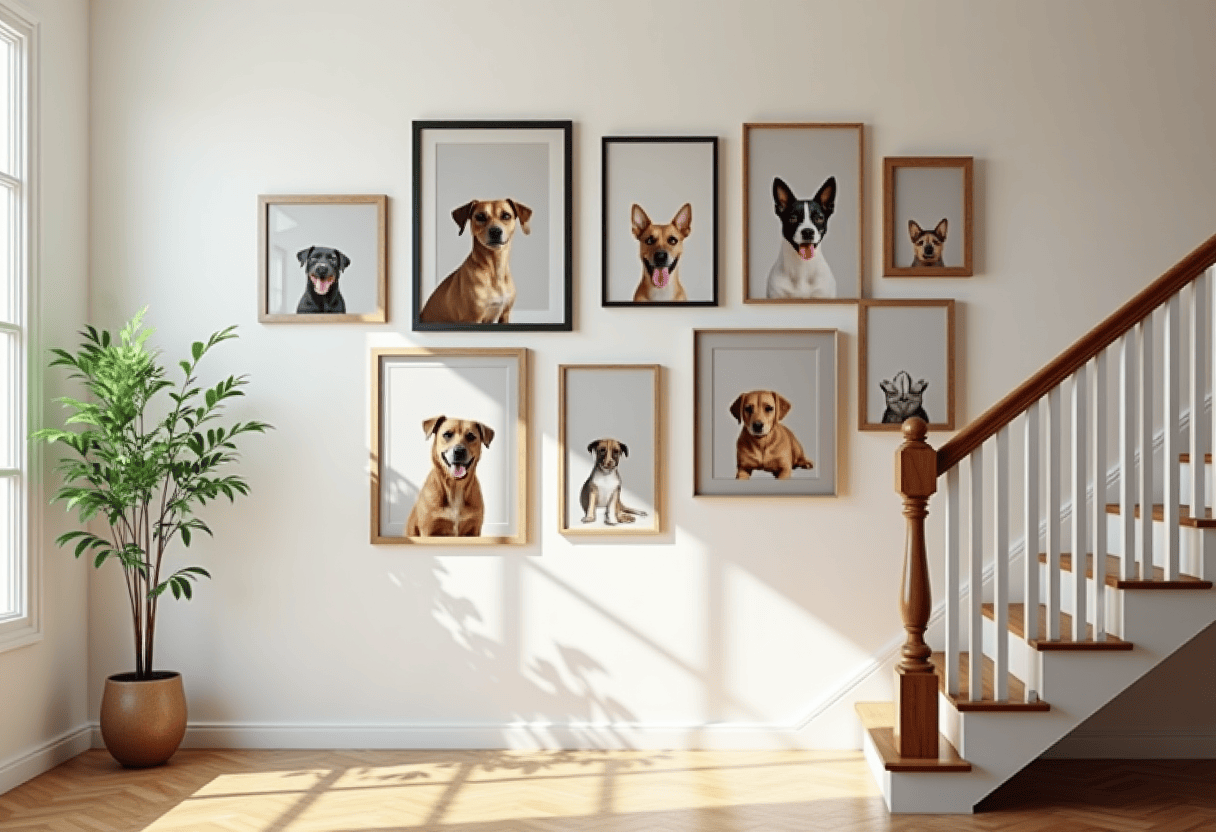
Multi-pet households often look better with multiple individual portraits in matching frames than one crowded multi-pet image. Three matching framed prints in a row (one per pet), or four in a 2x2 grid, reads as a deliberate gallery. Match frame style across all pieces (all black, all natural-wood, etc.) and keep matting consistent. The matching style ties the gallery together; the individual portraits preserve each pet's identity.
⚠ Common mistakes
- • Hanging the portrait too high — eye level is 57 inches, not 65+
- • Picking a frame that clashes with the style
- • Hanging in direct sunlight, which can fade prints over time
- • Picking a portrait too small for a large wall — looks lost
- • Picking a portrait too large for a small wall — dominates the room
Frequently asked questions
What's the right hanging height for a pet portrait?
Can I hang a pet portrait in a bathroom?
How do I display a portrait of a pet who has passed?
Can I display multiple pet portraits as a gallery?
How do I protect the portrait from fading?
Explore the styles
Start your portrait
Preview free, then choose a print. See delivery options at checkout.
Preview a style freeLast updated: 2026-09-22