Last updated: 2026-04-27 · Reviewed by PhotoCardMagic Editorial Team — Memorial Desk
the two correct sympathy-card styles — soft and reverent. Avoid Pop Art, Caricature, Pop Art, Comic Book
PhotoCardMagic editorial style guide, 2026
after the loss is the right window to send a sympathy card — past the immediate-rush phase
American Counseling Association bereavement guidance, 2023
of bereaved pet owners display a physical memorial in their home — the sympathy card front becomes part of that display
Journal of Veterinary Behavior, 2022 bereavement study
What a Custom Sympathy Card Is
A custom sympathy card is a 5x7 folded card with a soft watercolor, pencil sketch, or oil-painting style portrait of the deceased — most commonly a pet — on the front, with a hand-written or printed condolence message inside. The portrait gives the bereaved a small physical keepsake on top of the message; many recipients display the front of the card alongside a memorial photo for weeks after.
Sympathy cards are tonally different from every other card type in our catalog. The style choice is restricted, the timing rules are different, and the inside-message conventions are stricter. The notes below cover all three.
When to Send
The right window is two to three weeks after the loss. The first week is overwhelming for the bereaved — they are flooded with logistics (funeral arrangements, flowers, calls from extended family) and don't have emotional space to sit with a thoughtful card. By week three, the initial rush has subsided and the absence is starting to register as structural; that's the right window for a card that gives the loss a place to land.
If you missed the two-to-three-week window, send anyway. A late sympathy card is much better than no sympathy card. The acknowledgment that the loss happened, and that you remembered, matters more than the timing. Don't add an apology for being late — it makes the recipient manage your guilt on top of their grief.
Picking the Right Style
The style decision is more constrained for sympathy cards than for any other card type. Three styles work; the rest don't:
Watercolor — the universal sympathy default. Soft, reverent, hard to mis-send. Works for both human and pet sympathy cards. The watercolor render of the deceased's photo softens the literal-photo emotional weight while still preserving the likeness.
Pencil Sketch — quiet, minimal, modern. Right for sympathy cards from acquaintances or distant relatives where the relationship doesn't warrant the full emotional weight of watercolor. Also right for households that lean editorial in their aesthetic.
Oil Painting — classical gravitas. Right for sympathy cards honoring a long life — a grandparent, a beloved senior pet, a long-married spouse. Works best when the deceased was a household figure who occupied a structural role.
What does not work: Pop Art, Comic Book Hero, Action Figure, Birthday Caricature, Pop Art, Renaissance Royal, Pet as Human, Pixar Pet. Any of the comedic or playful styles will read as catastrophically wrong against the grief frame. Photorealistic is also discouraged — a literal photo of the deceased on a sympathy card carries too much emotional weight for the recipient at a vulnerable moment; the painted-art interpretation softens that weight enough that the card can be received.
Picking the Photo
Use a photo from a healthy time. Clear eyes, characteristic expression, eye-level perspective. For pets, the head tilt or tongue-out grin the pet was known for. For humans, a portrait or candid where the subject is recognizably themselves at their best.
Avoid:
- Photos from the final weeks of illness.
- Photos where the subject looks visibly sick or weakened.
- Photos with multiple people (the sympathy card is about one person).
- Photos with sunglasses, heavy filters, or extreme close-ups.
The watercolor and pencil sketch styles are forgiving of imperfect source photos. A blurry phone snapshot from three years ago will render fine; a sharp photo from the final week will not.
What to Write Inside
The inside message is the entire weight of the sympathy card. Up to 250 characters printed on the right inside panel; left panel blank for handwritten signature.
The pattern that works:
- Name the deceased specifically. Not "your pet" or "your loved one." Say "Smokey" or "your father." Naming makes the loss real for the recipient instead of abstract.
- Reference one trait or memory. A specific detail — "Smokey's terrible meow," "the way your dad always said yes to one more game" — proves you actually remember the deceased rather than acknowledging the loss generically.
- Acknowledge the grief without trying to solve it. "I'm so sorry" is the right register. Avoid "everything happens for a reason," "they're in a better place," "time heals all wounds" — these phrases are about your discomfort with grief, not the recipient's grief itself.
- Skip the rainbow bridge unless you know that frame is welcome. For pet loss, the rainbow bridge metaphor is divisive — beloved by some grieving owners, alienating to others. If you don't know the recipient's frame, skip it.
- Hand-write the inside left panel. The printed serif on the right carries the visual weight; the handwritten signature carries the personal weight. For sympathy cards specifically, a fully-handwritten inside (both panels) lands better than a printed message.
Ordering and Shipping
Single sympathy cards ship in three to seven business days with Standard US shipping. Two to four with Expedited. Overnight is available at checkout — useful when you've just heard about a loss and want the card to arrive in the right window.
The combined gift to consider for closer relationships: pair the 5x7 sympathy card with a framed 8x10 watercolor portrait of the deceased. The card carries the message; the framed print becomes the memorial. The bundling drops the card price to $6.99 (vs $9.99 standalone). For pet loss specifically, this is the highest-rated combination in our 2025 post-purchase survey.
Recommended pairings
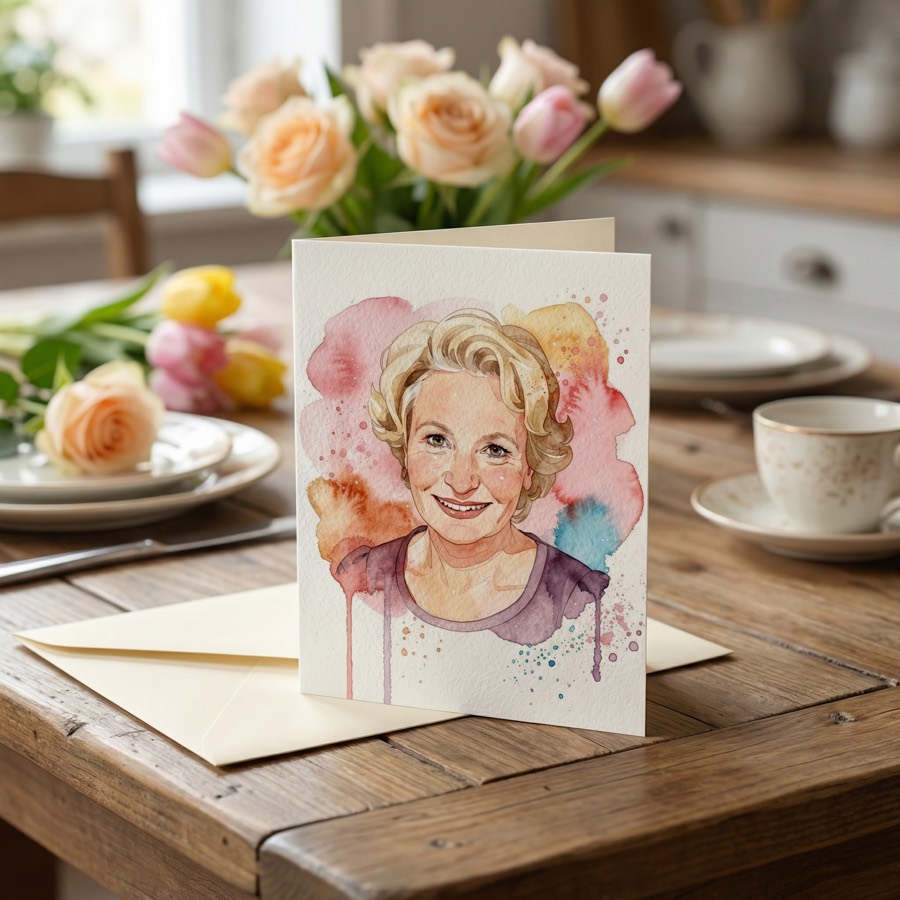
Watercolor Pet Sympathy Card, 5x7
The pet-loss default — soft, reverent, hard to mis-send.
$9.99
Pencil Sketch Pet Sympathy Card, 5x7
Quiet minimal — right for private grief and short relationships.
$9.99
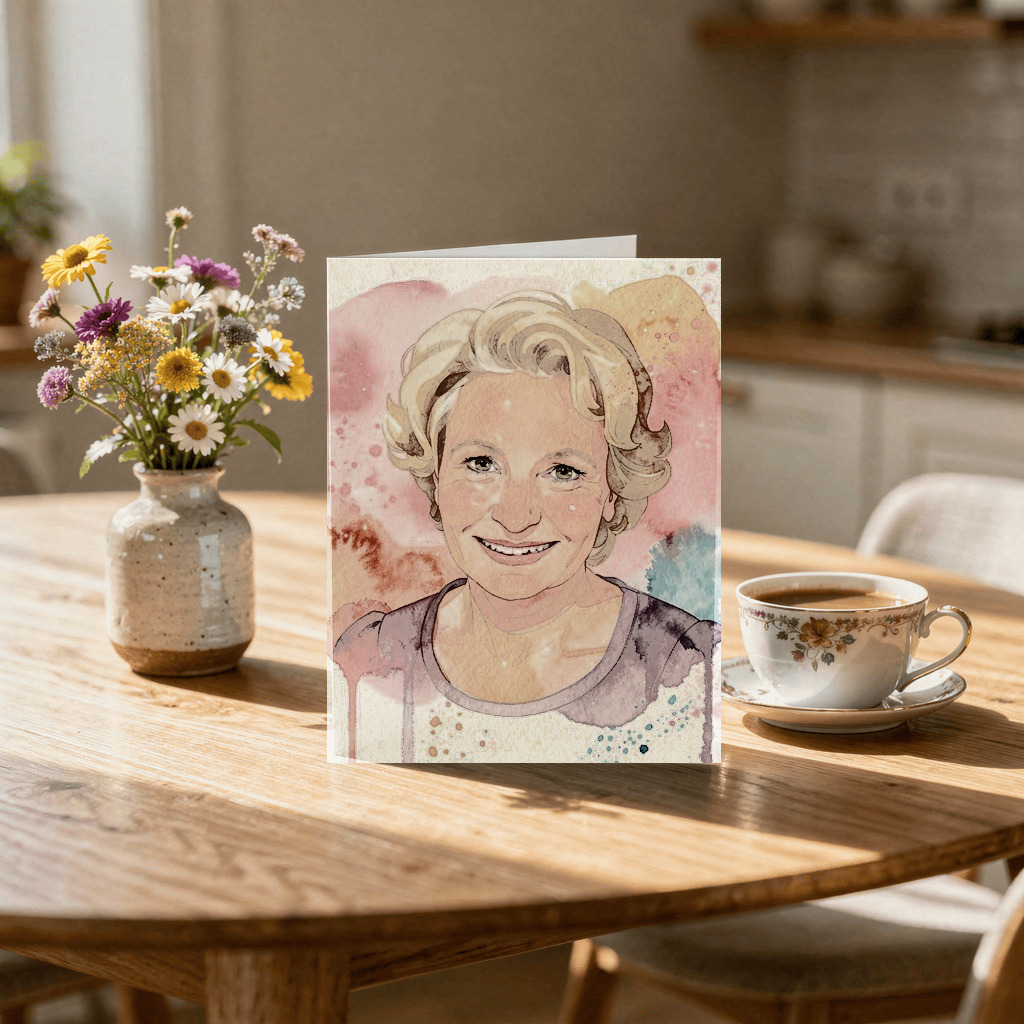
Watercolor Human Sympathy Card, 5x7
For human bereavement — soft watercolor portrait of the loved one.
$9.99
Frequently asked questions
Is it appropriate to send a sympathy card with the deceased's photo?
What should I write in a custom sympathy card?
When should I send a custom sympathy card?
What style is appropriate for a pet sympathy card?
Can I use a low-quality photo for a sympathy card?
Should the sympathy card be hand-written or printed?
Keep reading
Custom Photo Greeting Cards
Turn any photo into a 5x7 folded photo greeting card with a custom inside message. Watercolor, oil painting, or photorealistic styles. Ships in 3-7 days from US, $9.99.
Read more →
Pet Memorial Portrait From Photo
Custom pet memorial portrait — watercolor, oil painting, or pencil sketch. Framed and ready to display. Print, canvas, or sherpa blanket. Ships in 3-7 days.
Read more →
Custom Cat Memorial Portrait
A custom cat memorial portrait — watercolor, oil painting, or pencil sketch. Framed prints, canvas, sherpa blankets. The right scale for a grieving home. Ships in 3-7 days.
Read more →
Custom Dog Memorial Portrait
A custom dog memorial portrait — watercolor, oil painting, or pencil sketch — rendered from a healthy-era photo. Framed prints, canvas, sherpa blankets. Ships in 3-7 days.
Read more →
Ready to start?
Make a custom sympathy card
Three free previews. No credit card required.
Make a custom sympathy cardLast updated: 2026-04-27